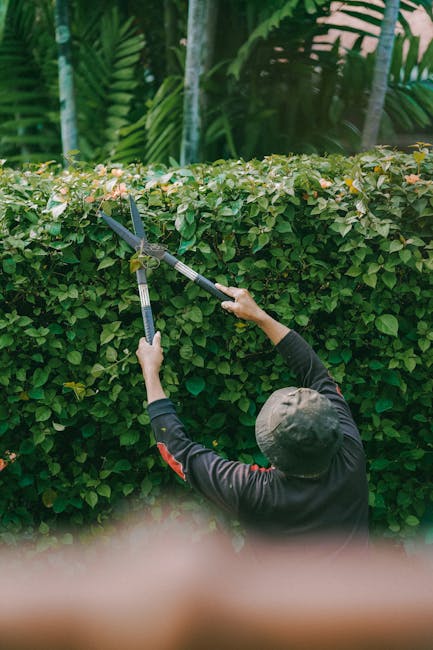
Tight space pruning solutions gardeners Tollington Park specialists

If your garden feels more like a narrow passage than an outdoor room, you are not alone. Terraced homes, side returns, small courtyards, and awkwardly boxed-in front gardens all create the same challenge: how do you prune properly without crushing plants, scraping fences, or turning the whole job into a clumsy shuffle? That is exactly where Tight space pruning solutions gardeners Tollington Park specialists come in. The aim is simple, really: keep plants healthy, neat, and safe in places where a full-size approach just does not fit. In this guide, we will walk through how compact pruning works, what good results look like, common mistakes, and when it makes sense to bring in help.
Compact gardens can be beautiful. They also demand a bit more judgement than open lawns. One wrong cut, and suddenly a hedge looks lopsided for months. One over-enthusiastic trim, and a climber gets stressed. So let's take it step by step, with practical detail and a local eye on what works in tighter London spaces.
Why Tight space pruning solutions gardeners Tollington Park specialists Matters
Pruning in a tight garden is not just smaller pruning. It is a different kind of decision-making. In a wide border, you can step back, adjust your angle, and work around the plant from several sides. In a narrow strip or a courtyard, you often cannot. That means every cut matters more, every reach is more awkward, and every stray branch seems determined to snag your sleeve.
In Tollington Park and similar North London settings, many gardens share the same characteristics: limited access, boundary walls, close neighbours, mature shrubs squeezed into small beds, and hedges that have grown just a bit too confidently. Over time, these spaces can become overcast, crowded, and difficult to maintain. Good pruning restores structure without forcing the garden into a bare, harsh look.
There is also a practical side. Tight spaces usually sit close to doors, paths, windows, sheds, and fencing. That means pruning is about more than appearance. It can improve daylight, airflow, and access. It can also reduce rubbing damage, prevent overhang into a neighbour's side, and make future maintenance less painful. Truth be told, a well-pruned compact garden often feels twice as large, even when nothing has been moved.
For gardeners trying to keep things tidy year-round, pruning is also part of a wider maintenance rhythm. If you are already thinking about routine garden maintenance, you will know that compact spaces quickly reveal neglect. A hedge grows a little wide, ivy creeps a little further, and suddenly the whole corner feels shut in.
Expert summary: In smaller gardens, pruning is less about taking off as much as possible and more about creating space, light, access, and shape without upsetting the plant's natural balance.
How Tight space pruning solutions gardeners Tollington Park specialists Works
Compact pruning starts with observation. Before any cutting begins, the gardener looks at how the plant grows, where it crowds the space, and which parts are actually causing the problem. In a small garden, that initial read is essential. You are not simply shortening everything. You are deciding what to keep, what to open up, and what to redirect.
There are a few common approaches. Selective thinning removes some inner stems to improve airflow and light. Reduction pruning shortens the outer growth to control spread and height. Formative pruning shapes younger plants so they develop well in restricted areas. And for hedges, careful trimming maintains a crisp edge while protecting the thicker, older growth underneath.
A specialist working in a tight space will usually think in layers. First layer: safety and access. Can the gardener reach the plant without damaging nearby surfaces? Second layer: structure. What is the plant's natural habit? Third layer: future growth. If this is cut today, how will it look in six weeks, or next spring? That future-minded approach matters. A rushed cut often creates a maintenance headache later. Been there, seen that.
In very compact settings, the work may also be split into smaller sessions. That gives time to reassess shape and avoid over-pruning. It is particularly useful for mixed planting, where a woody shrub, a climber, and a herbaceous border all compete for the same narrow slice of soil.
If the area includes climbers or dense ivy, pruning may need to be paired with removal or containment. For especially stubborn growth, you may find this guide useful: how to deal with ivy step by step. Ivy can look charming right up until it starts claiming the fence, the wall, and half the available light.
Key Benefits and Practical Advantages
Good tight-space pruning delivers more than a neat finish. In practice, it can change the whole feel of a garden.
- Better light penetration: Opening up crowded growth helps sunlight reach lower plants and smaller borders.
- Improved airflow: This can reduce damp pockets and help plants dry faster after rain.
- Clearer access: Pathways, bins, doors, and sheds become easier to use when branches are not intruding.
- Stronger plant shape: Pruning thoughtfully supports a more balanced habit, rather than wild or one-sided growth.
- Less neighbour conflict: Overhanging growth is a common source of friction in close-knit streets.
- Lower maintenance later: Regular, precise pruning is usually easier than trying to rescue a heavily overgrown plant.
There is a design benefit too. Small gardens often depend on clean lines. A clipped hedge, a restrained shrub, or a neatly lifted climber can make the whole space feel calmer. If you enjoy structured outdoor spaces, you may also appreciate ideas from this garden makeover guide, which speaks well to compact redesigns where every inch counts.
And let's not forget the emotional side. A cluttered little garden can start to feel tiring. A well-pruned one feels easier to use. You sit there with a cup of tea and think, yes, this works now. Nothing fancy. Just usable, tidy, alive.
Who This Is For and When It Makes Sense
This kind of pruning is ideal for homeowners and tenants with narrow or enclosed gardens, but it is not limited to them. It suits anyone dealing with awkward planting near walls, boundaries, patios, or access routes. It is especially useful if you have:
- small urban gardens with limited side access
- hedges close to fences or brick walls
- shrubs blocking windows or light
- climbers spreading into walkways
- garden rooms or seating areas that feel hemmed in
- planting beds where one species has started to dominate
It also makes sense before a bigger project. If you are planning a redesign, a pruning pass can reveal the real bones of the garden. Once the overgrowth is removed, you can see what is worth keeping and what needs a rethink. The same is true if you are looking at broader improvements like landscaping support or even a refreshed seating area, because pruning often makes the rest of the work easier to judge.
There are times when you should not wait. If branches are rubbing against a roofline, fence, shed, or utility route, or if a hedge is starting to swallow a path, the job is already overdue. That does not mean panic. It just means act sooner rather than later. Small corrections are always kinder than one huge rescue cut.
Step-by-Step Guidance
Here is a practical way to approach pruning in a tight garden without losing control of the shape.
- Assess the space from the main viewpoints. Stand at the doorway, patio, and any path you use daily. What feels crowded? What blocks light? What catches your eye first?
- Identify the plant's role. Is it for privacy, structure, flowers, screening, or simply filling a corner? The answer changes how much you should trim.
- Check for safety issues. Look for hidden thorns, dead wood, unstable stems, and branches pressing into hard surfaces.
- Choose the right pruning style. Thin, reduce, shape, or lift the canopy depending on the plant and the space.
- Start small. In a tight area, it is wise to remove a little, step back, and reassess. Then cut more if needed.
- Keep the line clean. Use the edge of a hedge, fence, or border as a visual guide where appropriate, but do not force every plant into a rigid box.
- Clear away debris as you go. In a small space, loose clippings create instant clutter. It is annoying, frankly, and avoidable.
- Finish with a final check from both sides. If the garden borders a neighbour's boundary, inspect the result from each viewpoint.
For hedge-heavy spaces, shape matters as much as height. A slightly tapered hedge, wider at the bottom and narrower at the top, tends to hold light better. If you want a deeper look at this, the article on hassle-free hedge shape is a useful companion read.
One small note: avoid trying to solve every issue in one go. Tight gardens tend to punish overconfidence. A measured approach nearly always wins.
Expert Tips for Better Results
Here are the habits that make the biggest difference in smaller gardens.
- Prune for sightlines, not just size. If a plant blocks a window or shrinks the feel of a patio, targeting that obstruction can transform the space.
- Use clean tools. In cramped conditions, cuts are closer to each other and disease can spread more easily if tools are dirty.
- Work in dry weather where possible. It is easier to judge shape and handle clippings when everything is not wet and slippery.
- Watch the boundary lines. In small gardens, the boundary is the room. Treat it with respect.
- Think about growth speed. Fast growers may need lighter but more frequent attention.
- Match pruning to the season. Some plants tolerate winter cuts, others prefer later winter, spring, or after flowering.
If you are building your own garden toolkit, a basic kit matters more than fancy gear. The essentials are covered well in the basic toolkit guide, and it is worth reviewing before you start. A sharp, reliable pair of secateurs is a lot more useful than a drawer full of things you never quite trust.
Another practical tip: if your garden combines pruning work with planting, consider whether some areas would benefit from ground-level softening rather than more hard structure. Low-growing planting can make a tight space feel less boxed in. You might like these ground cover ideas if you are trying to reduce visual clutter near the base of shrubs or fences.
And a tiny human truth: the "final" shape is never always the first shape you see. Sometimes you only realise the right line after one or two careful adjustments. That is normal. It is gardening, not sculpting marble at 8 a.m. in perfect silence.
Common Mistakes to Avoid
In compact spaces, the usual pruning mistakes become more noticeable. A small error can alter the whole balance of the garden.
- Cutting too much at once. Over-pruning can stress the plant and leave the space looking bare or exposed.
- Ignoring the plant's natural shape. Forcing a shrub into an unnatural outline usually creates more maintenance later.
- Using blunt or unsuitable tools. Ragged cuts take longer to recover and can look messy in a small, visible space.
- Leaving hidden stubs. They can spoil the finish and interfere with regrowth.
- Forgetting access. If you cannot safely reach the back of the plant, the end result tends to look uneven.
- Pruning during nesting season without checking first. In the UK, this is a real consideration in gardens with trees, hedges, or dense cover. Take care and do not disturb active nests.
One of the most common issues we see is people trimming only the front of a hedge or shrub because that is all they can reach. The back then keeps surging forward, and within a season the plant is back where it started, only less balanced. Not ideal. Not the end of the world either, but still frustrating.
If pruning is becoming a recurring battle, it can be worth simplifying the garden around the plant. That might mean reducing clutter near the base, reshaping adjacent beds, or introducing more manageable planting. The article on vertical gardens for urban spaces is a good reminder that sometimes the answer is to use height wisely rather than let everything spread sideways.
Tools, Resources and Recommendations
You do not need a van full of equipment, but you do need the right few tools. In tight spaces, control matters more than brute force.
| Tool | Best use | Why it helps in small spaces |
|---|---|---|
| Hand secateurs | Small stems, shaping, deadheading | Precise cuts in confined areas |
| Bypass loppers | Thicker stems and woody growth | Cleaner cuts with less strain |
| Short hedge shears | Light hedge trimming | More control near walls and paths |
| Pruning saw | Older, thicker branches | Useful where loppers are not enough |
| Gloves and eye protection | Thorns, debris, and flying cuttings | Important where space is tight and awkward |
Beyond tools, the best resources are often visual rather than technical. Before you cut, look at the garden from the side gate, the back door, and the seating area. If a branch blocks the route from one spot, it probably blocks light too. That simple observation can guide the whole job.
For owners who want to keep the rest of the garden in order after pruning, ongoing services like regular maintenance, lawn care, or hedge trimming support can be sensible options. Small gardens often look best when upkeep is light but consistent.
And if you are comparing service types, it helps to think in terms of outcomes rather than labels. Do you need more light? Better privacy? Safer access? Less bulk? Once you know the end result, the method becomes much clearer.
Law, Compliance, Standards, or Best Practice
For pruning in the UK, a lot of the sensible guidance falls under best practice rather than rigid universal rules. Still, there are important considerations to keep in mind.
First, nesting birds. It is wise to avoid disturbing active nests, especially in hedges, dense shrubs, and trees. If you are unsure, pause and inspect carefully before proceeding. Second, boundaries and access. If growth is crossing into neighbouring space, it is better to handle the situation calmly and professionally rather than with an aggressive cut that causes damage or dispute.
Third, safety. Good practice means using the right ladder setup where needed, working within your limits, and keeping paths clear of tools and cuttings. In compact gardens, trip hazards appear quickly. One loose branch on a narrow paving strip is enough to create trouble.
For larger woody work, there is also the question of whether pruning has moved beyond simple garden maintenance and into tree work or more technical removal. In those cases, a specialist may advise on whether tree surgery is more appropriate than standard pruning.
From a professional standpoint, transparency matters too. If you are hiring help, you should expect clear communication around scope, timing, safety, and what happens to waste. Pages such as health and safety policy, insurance and safety, terms and conditions, and payment and security can help set those expectations. It is not glamorous reading, sure, but it is the sort of thing that tells you a company takes the job seriously.
Options, Methods, or Comparison Table
Different pruning approaches suit different compact gardens. Here is a simple comparison to help you choose the right direction.
| Method | Best for | Strengths | Watch-outs |
|---|---|---|---|
| Light shaping | Small shrubs, neat borders | Quick, tidy, low stress | May not solve overcrowding |
| Selective thinning | Dense shrubs and mixed planting | Improves airflow and light | Needs a good eye to avoid patchiness |
| Reduction pruning | Hedges and overgrown boundary plants | Controls width and height | Can look harsh if overdone |
| Lift and clear | Pathways, seating areas, windows | Improves access and visibility | Does not address deep internal crowding |
| Formative pruning | Young plants in confined areas | Sets up a better long-term shape | Works best when started early |
If you are deciding between doing it yourself and hiring someone, the key question is not "Can I make a cut?" It is "Can I make the right cut without creating a bigger problem later?" That is the real line. A careful home gardener can absolutely manage many tasks, but awkward access, brittle mature growth, or thorny overrun can shift the job into specialist territory.
Case Study or Real-World Example
A typical small Tollington Park garden might have a narrow paved run, a compact seating corner, and one boundary hedge that has slowly widened over the years. Add a climber along the fence and a shrub near the patio, and the garden starts to feel narrower every month.
In one common scenario, the hedge has grown outward just enough to make the path feel tight. The shrub near the seating area has also lost its shape and now crowds the chair space. The pruning plan would usually look like this:
- reduce the hedge width slightly rather than cutting it hard back
- thin the inner shrub growth to open the centre
- lift lower branches to restore walking space
- clear the back of the patio edge so the area reads as open again
What changes most is not just the plant size. It is the feeling of the space. The path becomes easier to use. The seating corner gets more daylight in the afternoon. The boundary looks intentional rather than overgrown. That is the difference a good pruning strategy makes.
If the garden also contains a small seating feature, a compact deck, or paved area, pruning can work alongside other improvements. A tidy line of planting beside a freshly cleaned surface often looks far better than either element on its own. For example, pairing pruning with patio cleaning or decking services can lift the whole garden without changing its footprint.
That kind of transformation is what many people want: not a full rebuild, just a garden that feels breathable again. Simple, but not simplistic.
Practical Checklist
Use this quick checklist before you begin any pruning work in a tight space.
- Have I identified the plants that are actually causing the problem?
- Do I know whether the plant flowers on old wood or new wood?
- Have I checked for nesting birds or wildlife activity?
- Are my tools sharp, clean, and suitable for the job?
- Can I safely reach the back and sides without damaging nearby surfaces?
- Have I planned the final shape before making the first cut?
- Do I need to clear pathways or protect paving first?
- Will the garden still look balanced after the cut?
- Do I need help with waste removal afterwards?
- Is this job actually bigger than simple pruning?
If you can answer most of those with confidence, you are in good shape. If not, slow down. There is no prize for rushing a neat garden into a mess. None at all.
Conclusion
Tight space pruning is a careful blend of restraint, judgement, and practical know-how. In small Tollington Park gardens, the goal is not to force plants into submission. It is to make the space work better for the people who use it and for the plants living in it. When pruning is done well, the garden feels lighter, easier, and more welcoming. Not bigger, exactly. Just better.
Whether you are dealing with a narrow hedge, a crowded border, a climber that has got a bit too enthusiastic, or a patch of planting that needs breathing room, the right approach can change the whole experience of the garden. And if you are planning broader improvements, from maintenance to redesign, a considered pruning plan is often the best place to start.
Get a free quote today and see how much you can save.
Sometimes the smallest cut opens up the biggest sense of calm. That is the quiet beauty of good garden work.
Frequently Asked Questions
What are tight space pruning solutions gardeners Tollington Park specialists used for?
They are used to manage overgrown plants, hedges, shrubs, and climbers in narrow or enclosed gardens where access is limited and precision matters more than heavy cutting.
Is pruning in a small garden different from pruning in a larger one?
Yes. In a smaller garden, you have less room to move, less margin for error, and more visible impact from each cut. The work usually focuses on shape, access, light, and balance rather than bulk removal.
How often should compact garden pruning be done?
That depends on the plant type and growth rate. Fast-growing hedges and climbers may need regular light attention, while slower shrubs may only need seasonal shaping or annual reduction.
Can pruning make a tiny garden look bigger?
Absolutely. Opening sightlines, lifting low growth, and easing overcrowding can create the feeling of more space, even though the actual footprint stays the same.
What plants are most likely to cause problems in tight spaces?
Hedges, climbing plants, vigorous shrubs, and self-seeding growth often become challenging in small gardens because they expand quickly and can block light or access.
Should I prune before or after a garden makeover?
Usually before. Pruning helps reveal the true structure of the garden, which makes it much easier to plan seating, planting, and hard landscaping changes sensibly.
Can I do compact pruning myself?
Often, yes. If the growth is manageable and the plant is straightforward, a careful homeowner can do a good job. If access is awkward, the plant is mature, or the shape is already badly off, a specialist may be the safer choice.
What should I avoid when pruning near fences or walls?
Avoid hacking back to the point of damage, leaving ragged stubs, or forcing tools into awkward angles that could chip masonry or strain the plant. Small, careful cuts are usually best.
Does pruning help with garden maintenance overall?
Yes. Regular pruning usually reduces future workload, improves airflow, and makes routine tasks like sweeping, mowing, and watering easier to manage.
When is the best time of year for pruning in a small London garden?
It depends on the plant, but many pruning tasks are best handled outside active nesting periods and in a season when the plant can recover well. A specialist will normally adjust timing to suit the species and current conditions.
What if my garden has ivy or very dense climbers?
Dense climbers often need a more structured approach, sometimes including staged reduction or full removal in sections. If ivy is causing major crowding, a dedicated removal plan may be more effective than simple trimming.
How do I know if the job is too big for a DIY weekend?
If the plant is mature, the access is awkward, the cuts would affect neighbouring boundaries, or the result needs to look polished rather than simply tidy, it is probably worth getting specialist help.
Can pruning improve privacy as well as space?
Yes. A well-managed hedge or screen can keep privacy while taking up less visual bulk. The trick is to keep the structure dense where it matters and reduce the width only where it is causing problems.
How do I get started if I want help with this sort of work?
The easiest next step is to describe the plants, the access, and what you want the space to feel like after the work is done. That gives a clearer brief and usually leads to a better result from the start.